
Logitech G Driving Force Shifter for G29 and G920
Logitech G Driving Force Shifter for G29 and G920
Description
Features
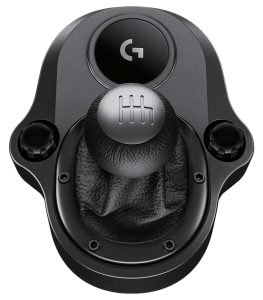 The Logitech G Driving Force Shifter is a purpose-built accessory engineered to expand the realism and immersion of sim racing when paired with Logitech’s popular force-feedback steering wheels such as the G29, G920, and G923. At its core, this peripheral is designed to mimic the tactile experience of a real manual transmission gearbox, providing six forward gears plus a push-down reverse gear. Rather than relying solely on paddle shifters mounted on the steering wheel, racers can physically shift through gears using a dedicated shifter unit, adding both physicality and authenticity to the racing simulation experience. Though often purchased by more dedicated sim racers, the shifter can also serve as an entry point for gamers transitioning from automatic controls to a more lifelike manual shifting paradigm. In competitive and casual environments alike, having a true H-pattern shifter contributes to increased control over launch dynamics, clutch engagement, and overall racecraft, making it a justified investment for users looking to step up their racing rig beyond wheel and pedals alone.
Compatibility Across Logitech Racing Wheels
One of the standout aspects of the Logitech G Driving Force Shifter is its broad compatibility with multiple generations of Logitech’s racing wheel ecosystem. Specifically, it is designed to work seamlessly with the G29, G920, and the newer G923 racing wheels. These wheels are themselves engineered for use on different platforms — the G29 and G923 are primarily marketed toward PlayStation and PC users, while the G920 targets the Xbox and PC environment. Despite these platform distinctions, the shifter maintains functional universality across all three when connected through a supported wheel base. The firmware and hardware design allow the shifter to communicate gear positions accurately to the wheel’s internal controller, which then relays that data to the gaming platform. This interoperability simplifies purchase decisions for users of mixed console and PC setups and adds value to the Logitech ecosystem as a whole. Logitech’s decision to maintain backward compatibility ensures that users investing in this accessory today can leverage it with future wheel upgrades, provided they remain within the Logitech G lineup.
Six-Speed H-Pattern Design and Reverse Gear Mechanism
At the heart of the Driving Force Shifter is a full six-speed H-pattern gearbox that reflects the layout of a traditional manual transmission found in many sports cars. This configuration offers six distinct forward gear positions arranged in a familiar H-pattern and a push-down reverse gear that requires the driver to apply downward force before shifting into the reverse position. The push-down mechanism is an intelligent safety feature that helps prevent accidental engagement of reverse while moving forward — a problem common in simpler gated designs. Each gear position is distinct and tactile; when shifting from gear to gear, the shifter delivers noticeable resistance and click-into-place feedback that helps the driver confirm engagement without needing to glance away from the on-screen action. This physicality enhances muscle memory and provides a more intuitive control feel compared to sequential paddle shifters. The H-pattern also enriches gameplay by introducing driver-level decision making, such as while heel-and-toe downshifting into sharp corners, a technique prized in high-level racing.
Steel and Leather Components: Build Quality and Durability
Logitech built the Driving Force Shifter with a focus on robustness and long-term durability, using premium materials such as steel and leather in key structural and contact areas. The shift lever itself is often wrapped in high-quality automotive-grade leather, offering a comfortable and familiar grip that many sim racers compare to the feel of a real sports car’s shift knob. Steel is used in the internal frame and pivot components to minimize flex and wear, ensuring that repeated shifting and vigorous use do not degrade performance over time. Metal-to-metal contact points and precision-engineered joints help provide consistent feedback and reduce the likelihood of plastic fatigue — a common failure mode in lower-end shifter accessories. Logitech also applies textured finishes to areas where the driver’s hands frequently contact the unit, helping reduce slip during aggressive gear changes. Overall, the combination of leather and steel not only enhances durability but also elevates the aesthetic presence of the shifter on a racing rig, giving it a professional and authentic look that aligns with enthusiast expectations.
Mounting and Integration with Racing Rigs
A key strength of the Logitech G Driving Force Shifter is its flexible mounting options that allow it to integrate securely into a wide variety of racing rig setups. Whether users have a dedicated cockpit, a desk-mounted rig, or a custom-built frame made from aluminum extrusion or wood, the shifter can be fastened securely using standard bolt-on attachments or brackets. Logitech includes multiple threaded holes on the base of the unit that align with common rig spacing standards, and many third-party rigs offer compatible mounting plates that accept the shifter with minimal adjustment. When installed, the shifter remains stable during forceful gear changes, preventing unwanted movement that could disrupt precision racing inputs. Additionally, its relatively compact footprint ensures that it doesn’t dominate space on smaller rigs while still being easily accessible during intense races. Users can position the shifter to the left or right of the wheel base, depending on their preferred hand and driving style, further enhancing ergonomic comfort. The rigidity and flexibility of mounting options make it suitable for home enthusiasts and professional sim racers alike.
Technical Connectivity and Interface
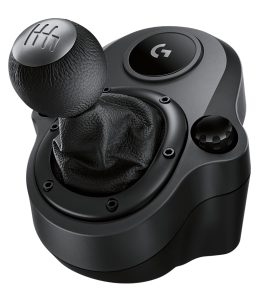 The Driving Force Shifter connects to the racing wheel base via a dedicated cable and connector, which transmits gear position data directly to the wheel’s internal processor. It does not connect to the PC or console on its own; instead, it relies on the wheel base to interpret and relay signals to the gaming system. This design choice simplifies setup and reduces cable clutter running to the gaming platform. Logitech uses a robust and shielded wiring harness to ensure stable communication without interference, important when long cable runs are present or when users are operating multiple peripherals from the same rig. Internally, the shifter unit uses a combination of digital switches and sensors to detect gear engagement, providing near-instantaneous recognition of gear changes in supported racing titles. Compatibility with popular sim racing titles such as Assetto Corsa, iRacing, F1 series, and Project CARS allows players to leverage full manual transmission control, provided the game supports H-pattern gear inputs from sim peripherals. Logitech’s choice to centralize interface through the wheel base also means that firmware updates to the wheel can improve compatibility or responsiveness of the shifter over time.
Tactile Feedback and User Experience
Though the Driving Force Shifter does not provide force feedback itself, the tactile feel and mechanical precision contribute significantly to the overall user experience. Each gear position has a discernible “notch,” achieved through careful engineering of detents and friction points within the mechanism. This helps reduce mis-shifts and enhances control, especially in high-intensity scenarios where quick, accurate gear changes matter. The push-down reverse gear adds a layer of intentionality, ensuring that drivers consciously select reverse rather than accidentally slipping into it during an aggressive upshift. These mechanical cues also improve muscle memory, as the user comes to rely on feel rather than visuals to know what gear is engaged. Combined with the force feedback from the steering wheel, the shifter helps complete a triad of inputs — wheel, pedals, and shift — that mirrors the complexities of real driving. Logitech’s ergonomic decisions around grip size, throw distance between gears, and required actuation force strike a balance between realism and usability, ensuring that both casual gamers and seasoned sim racers appreciate the responsiveness of the unit.
Installation, Calibration, and Adjustments
Setting up the Logitech G Driving Force Shifter involves a few straightforward steps that emphasize precision and personalization. First, the user physically mounts the shifter to their rig using the provided hardware or custom brackets. Once mounted, the shifter cable plugs into the wheel base via the designated port. From there, most supported games automatically detect the shifter’s presence and assign gear positions within the control settings menu. Many titles also allow users to calibrate the H-pattern, ensuring that the detected gear positions match the physical layout of the shifter. Calibration may involve specifying dead zones, adjusting sensitivity, or confirming gear thresholds so that small deviations do not result in unintended gear engagements. Some advanced users choose to fine-tune gear settings within Logitech’s software utilities or the game’s control mapping interface to customize responsiveness for different car classes or transmission types. While there are no adjustable springs or mechanical tensioners built into the standard unit, careful mounting and game calibration ensure that the shifter performs optimally across a range of simulation environments.
Comparison with Sequential Shifters and the Logitech Competition
When compared to sequential shifters — which move in a forward and backward motion rather than an H-pattern — the Logitech G Driving Force Shifter offers a more authentic reproduction of a traditional manual gearbox. Sequential units are often preferred in rally or truck simulations due to their simplicity and rapid shift capability, but they lack the nuanced positional differences present in an H-pattern. For users seeking the experience of road and GT racing, the H-pattern feels more natural and rewarding, especially when mastering heel-and-toe techniques. In the Logitech ecosystem, the Driving Force Shifter sits above basic paddle inputs and below high-end professional-grade shifters in terms of mechanical complexity and price, offering an excellent balance of performance, build quality, and cost. While competitors from specialized sim racing brands may include adjustable tension or alternative gate designs, Logitech’s solution remains one of the most accessible and widely supported options on the market, largely due to its integration with best-selling racing wheels and broad software compatibility.
Tips for Maximizing Performance and Longevity
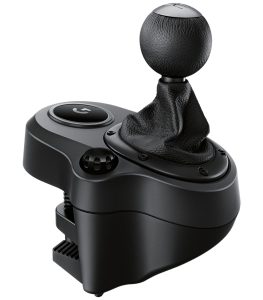 To ensure the Logitech G Driving Force Shifter delivers long life and consistent performance, users should pay attention to proper mounting, maintenance, and integration practices. Keeping the unit clean and free of dust will prevent grit from accumulating in the mechanical detents and potentially degrading feel over time. Periodic checks of mounting hardware ensure that the shifter remains firmly attached to the rig and does not introduce unwanted vibration or movement during gear changes. Calibrating the shifter in each game and updating wheel firmware when available can help maintain signal integrity and responsiveness. For users who plan to transition between titles with different shifting demands, taking the time to adjust control profiles ensures that each game recognizes the shifter correctly. Finally, pairing the shifter with a high-quality racing setup — such as a solid rig frame and quality pedals — maximizes the investment, creating an immersive and enduring sim racing experience that reflects the spirit and challenge of real-world manual transmission driving.